By Van Ton-Quinlivan, CEO, Futuro Health | Author, WorkforceRx: Agile Strategies for Unsettled Times

Healthcare often celebrates breakthrough technologies, new treatments, and cutting-edge research. Yet one of the most powerful drivers of better outcomes isn’t a new invention at all. It’s teamwork.
The reality is simple: no one can do healthcare alone.
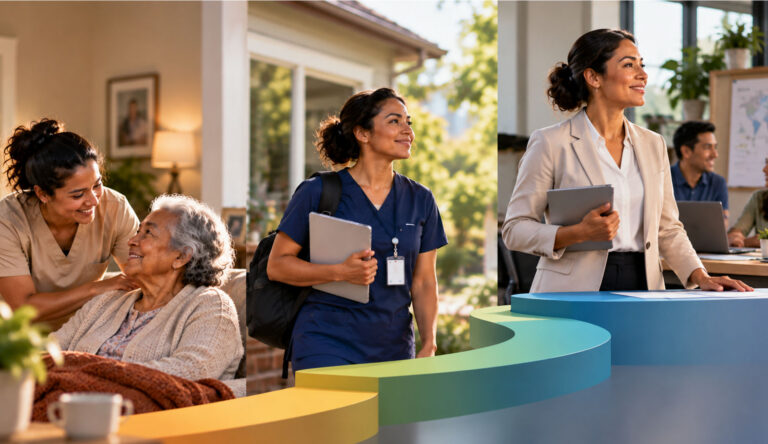
For decades, healthcare systems were organized around institutions and specialties — leaving patients to navigate a maze of providers, appointments, referrals, and paperwork. The burden of coordination fell on the person who could least afford to carry it: the patient. Today, a different model is taking hold. Person-centered care recognizes that patients are more than a diagnosis. They are individuals with unique circumstances, pressures, and lives. Meeting their needs requires physicians, nurses, medical assistants, community health workers, behavioral health specialists, social workers — and often, prevention first — working together as a coordinated team.
When healthcare professionals collaborate, patients benefit. Communication improves. Gaps in care close. And individuals receive support that addresses not only their medical needs but the social and practical factors that shape health outcomes.
Programs like PACE — the Program of All-Inclusive Care for the Elderly — demonstrate what team-based care looks like in practice. By bringing interdisciplinary teams together around the individual, PACE helps older adults receive comprehensive care while maintaining independence and quality of life. When I visited a newly opened PACE center in Elk Grove recently, what struck me wasn’t the clinical infrastructure — it was how the space felt: more community center than care facility, full of seniors gathered in a welcoming environment. For me, this is also personal. My father recently turned 88, and my mother-in-law recently became widowed — so the care of the nation’s aging population isn’t an abstraction. It’s about family. That’s what makes the work of building the right teams around older adults not just a policy priority, but a deeply human one.
The same principle applies to workforce development.
Just as healthcare moves toward team-based care, workforce development succeeds when employers, educators, and community partners work together around the learner. No single organization can close the workforce gap alone. Progress happens when partners braid resources, coordinate support, and remove barriers — together.
The Scholars we serve at Futuro Health are working adults balancing jobs, families, caregiving, and financial pressure while pursuing healthcare credentials. They are clear about their motivation: they want to better themselves and the future they are building for their families. Yet too often, the complexity of navigating enrollment, support services, and competing demands becomes a barrier in itself. When our partners — employers, community colleges, community organizations — function as a team, that complexity becomes manageable. Barriers get removed. Opportunities unlock.
The healthcare workforce shortage is often framed as a numbers problem. We need more doctors, nurses, allied health workers, mental and behavioral health professionals, and so on. That is true. But the solution is not simply producing more workers. It is building stronger systems of collaboration that enable traditional and nontraditional talent to enter, navigate, and advance in healthcare careers. The California Health Care Foundation’s recent report, Strengthening California’s Primary Care Team Workforce, offers a useful lens on exactly this challenge — and is worth a read for anyone thinking seriously about what team-based care requires at the systems level.
As care models evolve and patient needs grow more complex, the ability to work across disciplines is becoming as essential as clinical expertise. The teams that will define the next era of healthcare are the ones built on trust, coordination, and a shared commitment to the person at the center.
Van Ton-Quinlivan is Founder and CEO of Futuro Health and a nationally recognized expert in workforce development. Her distinguished career spans the private, public, and nonprofit sectors. She is a White House Champion of Change and California Steward Leader, past chair of the California Health Workforce Education and Training Council, and former Executive Vice Chancellor of the California Community Colleges. She is the author of WorkforceRx: Agile Strategies for Unsettled Times.