By Van Ton-Quinlivan
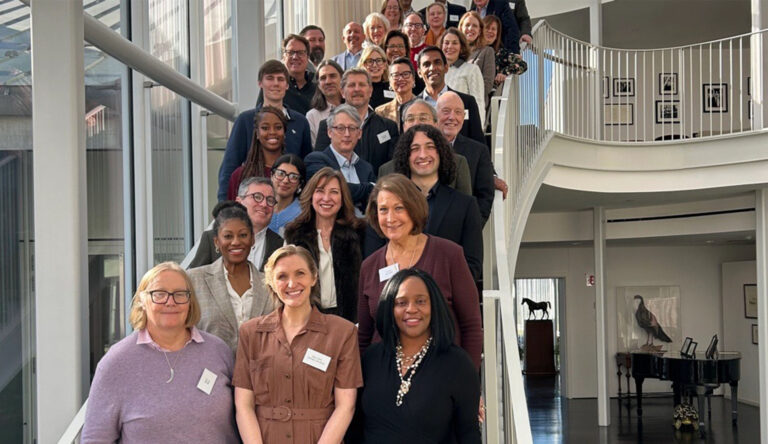
In preparing for a recent lunchtime panel with the American Council on Education and its 800+ conference attendees—titled “Unbundled. Accelerated. Aligned.”—I found myself returning to a deceptively simple question: What is the value of “place” today, when learning can happen anywhere?

On my panel were executives from Coursera and edX, platforms that collectively reach hundreds of millions of learners worldwide. We were preparing for a provocative discussion—one that would challenge long-held assumptions about the primacy of the physical campus.
For more than a century, colleges and universities have earned public trust by bundling multiple functions into a single, cohesive experience: content, instruction, assessment, credentials, learner support, and community. This campus-based model didn’t just deliver education—it expanded access, fueled innovation, and helped build the American middle class. “Place” mattered because it concentrated opportunity. It signaled quality. It created belonging.
But that bundle is no longer fixed.
With the rise of online platforms, alternative credential providers, and employer-led training, learners now assemble their own pathways from a growing marketplace of options. AI will only accelerate this shift—lowering the cost of content, personalizing instruction, and reshaping assessment in ways we are only beginning to understand. The result is not just more choice, but more fragmentation. The bundle has been broken apart.
And yet, higher education’s role is not diminished—it is being redefined. The central question is no longer whether institutions will unbundle, but how they will rebundle in ways that are meaningful, differentiated, and aligned with today’s learners.
Rebundling higher education for today requires clarity of purpose.
As colleges and universities look to recruit beyond a shrinking pool of traditional high school graduates, they must decide which elements of the bundle are essential—and which can be partnered, outsourced, or reimagined.
Relevance becomes the first test.
What does it mean for learning to translate into economic mobility? Learners are increasingly pragmatic. They are asking: Will this program lead to a job? Will it help me advance? Institutions that can clearly connect learning to labor market outcomes—without reducing education to mere job training—will stand apart.
Human well-being is the second anchor.
If AI and automation reshape work, then distinctly human capabilities—communication, empathy, ethical judgment, resilience—grow in importance. This is where higher education has always had a quiet advantage. The question is whether institutions will lean into it more intentionally. Supporting the “whole learner” is not ancillary; it is central to long-term success in both life and work.
And then there is a third, often underappreciated function: the transfer of values.
As Joshua Travis Brown of the Johns Hopkins University School of Education shared with me on his recent appearance my on WorkforceRx podcast, colleges are not just sites of knowledge transmission—they are sites of values formation. Whether through athletics, service, religious life, or civic engagement, institutions pass along norms, identities, and a sense of shared purpose. In a distributed, digital-first world, this function becomes harder to replicate—and arguably more important.
Which brings us back to “place.”
If content can be accessed anywhere, then the value of place shifts from delivery to experience. Place becomes less about where you sit in a classroom and more about where you are known, challenged, and transformed. It is where relationships form—between peers, mentors, and networks that endure well beyond graduation. It is where learners test ideas, encounter difference, and develop a sense of self.
The future, then, is not a binary choice between physical campuses and digital platforms. It is a more intentional integration of both. The institutions that thrive will be those that stop trying to preserve the old bundle intact—and instead design new ones: modular, flexible, and deeply aligned to learner goals, while still preserving what only they can uniquely provide.
In a world of abundant access, place still matters.
But only if it stands for something unmistakably valuable
Futuro Health CEO Van Ton-Quinlivan is a nationally recognized expert in workforce development. Her distinguished career spans the private, public, and nonprofit sectors. She is a White House Champion of Change and California Steward Leader and formerly served as Executive Vice Chancellor of the California Community Colleges.